
What Does Blood Pressure at Age 65 Mean?
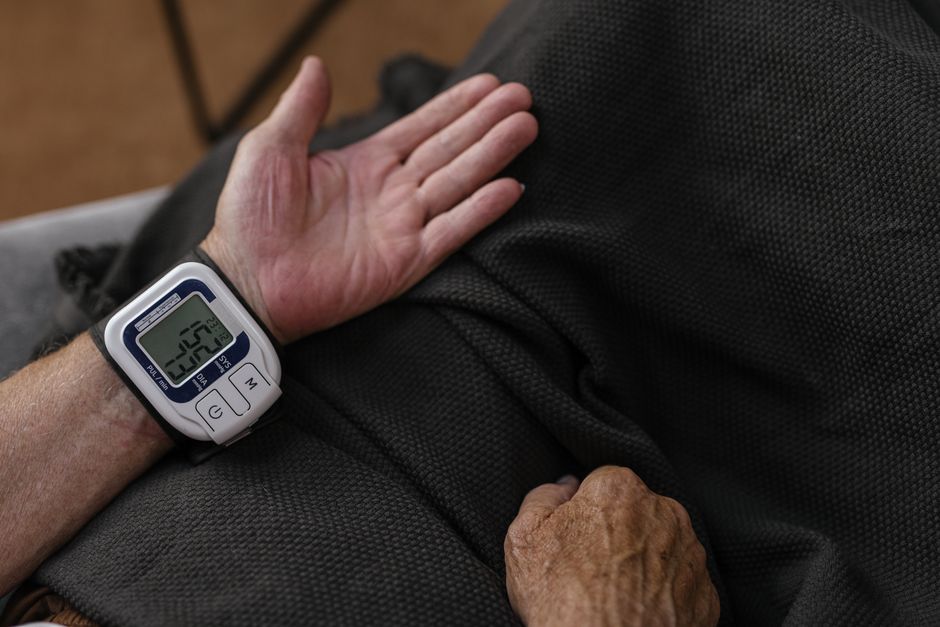
Blood pressure at age 65 is interpreted using the same basic thresholds as in other adults: the top number is systolic pressure and the bottom is diastolic pressure. Under the 2025 American Heart Association guideline, stage 1 hypertension starts at 130/80 mm Hg and stage 2 at 140/90 mm Hg. Age alone does not make a high reading normal; treatment targets depend on health, frailty, and the guideline used.
What is an ideal blood pressure for a 65 year old?
There is no single age-65 number that fits every person. The 2025 American Heart Association (AHA) guideline sets an overarching treatment goal below 130/80 mm Hg for adults, while noting additional considerations for people in institutional care or with limited predicted lifespan. The European Society of Cardiology (ESC) treats targets for very old or frail patients differently, which is one reason a personal target needs clinical context.
The reading has two parts. Systolic pressure, the top number, measures pressure as the heart beats; diastolic pressure, the bottom number, measures it between beats. A reading can meet a high-blood-pressure threshold because either number is elevated. The National Institute on Aging notes that isolated systolic hypertension—a high top number with a lower bottom number—is common in older adults.
Use categories to understand a reading, not to diagnose yourself from one measurement. The AHA’s 2025 classification places systolic readings of 130–139 mm Hg or diastolic readings of 80–89 mm Hg in stage 1 hypertension; systolic readings of at least 140 or diastolic readings of at least 90 are stage 2. Those are classification thresholds, while a treatment goal is the level clinicians aim for after considering the person and circumstances.
| Reading category or context | What it means | Source |
|---|---|---|
| Stage 1 hypertension | Systolic 130–139 mm Hg or diastolic 80–89 mm Hg | AHA, 2025 |
| Stage 2 hypertension | Systolic at least 140 mm Hg or diastolic at least 90 mm Hg | AHA, 2025 |
| Overarching adult treatment goal | Below 130/80 mm Hg, with additional considerations for some adults | AHA, 2025 |
| Very old or frail patients, if tolerated | Systolic 130–140 mm Hg and diastolic 80–90 mm Hg | ESC, 2024 guidance |
The ESC’s 2024 guideline includes separate considerations for very old or frail people and for orthostatic hypotension. Its 130–140/80–90 mm Hg target applies to that older or frail context if tolerated; it is not a general target for everyone aged 65. The practical takeaway is to ask the clinician which target applies and whether it refers to clinic or home readings.
Is 140/90 BP normal for 65 years?
No. Under the AHA’s 2025 categories, 140/90 mm Hg is stage 2 hypertension, not a reading that becomes normal at age 65. The number can still be affected by how and where it was taken, so a single clinic result does not tell the whole story.
Clinic and out-of-office measurements can differ substantially. The AHA scientific statement on blood-pressure measurement identifies ambulatory monitoring as the reference standard for out-of-office assessment; home monitoring is an alternative when ambulatory monitoring is unavailable or not tolerated. Repeated home readings can help clinicians assess whether a clinic reading reflects a persistent pattern or a difference between settings.
That distinction matters because categories, treatment targets, and measurement settings answer different questions. A threshold labels the reading; an individualized target guides treatment; and a measurement routine helps establish whether the result is representative. Bring a written home record to a clinical discussion rather than treating one high result as the final answer.
Is 150/80 BP normal for senior citizens?
No. A reading of 150/80 mm Hg is stage 2 under the AHA’s 2025 guideline because the systolic, or top, number is at least 140, even though the diastolic number is below 90. A lower bottom number does not cancel out an elevated top number.
The right treatment response depends on the person, not the birthday alone. The ESC describes a systolic target of 130–140 mm Hg and diastolic target of 80–90 mm Hg for very old or frail people if tolerated. That is a specific consideration for that group—not permission to assume 150 systolic is normal for every senior citizen. Health conditions, frailty, other medicines, and symptoms can affect the plan.
Dizziness on standing or falls are useful information for the review. The ESC describes orthostatic hypotension as a systolic pressure fall of more than 20 mm Hg from lying to standing and links it with fainting and falls in older adults. If symptoms occur, a clinician may consider standing measurements and review medicines; medication changes should be guided by that review.
What is stroke level blood pressure?
There is no single home reading in these sources that, by itself, establishes that a stroke is happening. A reading higher than 180/120 mm Hg is a severe elevation that calls for prompt action: the AHA advises waiting at least one minute and measuring again. If it remains that high, contact a healthcare professional immediately; if it occurs with chest pain, shortness of breath, weakness, vision changes, or difficulty speaking, call emergency services.
The AHA’s 2025 guideline recommends timely outpatient evaluation and treatment for severe hypertension above 180/120 mm Hg when there is no acute target-organ damage. That is different from a reading accompanied by emergency symptoms. In the urgent situation, the symptoms—not just the number—change the next step.
For readings below that severe range but repeatedly above your clinician’s agreed target, keep the measurements and arrange follow-up. A single high result is not necessarily cause for alarm, but repeated elevations deserve a conversation. Do not stop blood pressure medication based on home readings without first checking with a healthcare professional.
How can you confirm readings safely at home?
Make the setup repeatable. The AHA recommends a validated automatic upper-arm cuff with a correctly sized cuff; wrist and finger devices are less reliable. Before measuring, avoid smoking, caffeine, and exercise for 30 minutes, empty your bladder, then sit quietly for at least five minutes with your back supported, feet flat, and arm supported at heart level.
- Take two readings. Measure twice, one minute apart, during each session, and record both numbers and the time.
- Build a pattern. The AHA scientific statement describes a commonly recommended schedule of two readings at least one minute apart in the morning and two in the evening, preferably over seven days; at least three days may be sufficient.
- Use the average. The statement recommends averaging all systolic and diastolic readings for the monitoring period rather than selecting one result. Share the record with a healthcare professional, especially when readings stay high or symptoms occur.
This routine reduces avoidable measurement noise: a rushed reading after activity is not directly comparable with one taken after quiet rest. If a result is very high, follow the repeat-and-contact steps above rather than waiting to complete a week of readings. For routine tracking, consistent technique and a series of readings give a more useful picture than reacting to a single number.
When discussing dizziness or falls, report when they happen—especially whether they occur after standing—and bring a list of prescription medicines, over-the-counter medicines, vitamins, and supplements. The National Institute on Aging advises older adults to rise slowly and tell a clinician about medicines and supplements that may affect blood pressure or interact with treatment. Keep taking prescribed medication unless a doctor says to stop.
Frequently Asked Questions
Does a blood pressure target change after age 65?
Age 65 alone does not set a different target. The 2025 American Heart Association guideline gives an overarching treatment goal below 130/80 mm Hg for adults, while the European Society of Cardiology describes a 130–140 mm Hg systolic and 80–90 mm Hg diastolic target for very old or frail people if tolerated. A clinician considers health conditions, frailty, and treatment tolerance.
How should someone over 65 check blood pressure at home?
Use a validated automatic upper-arm cuff with the right cuff size. Avoid smoking, caffeine, and exercise for 30 minutes beforehand, empty the bladder, sit quietly for at least five minutes, and keep the back supported, feet flat, and arm at heart level. Take two readings one minute apart and record both; repeated readings and their average are more useful than a single result.
Can blood pressure medication cause dizziness or falls in older adults?
Low blood pressure or a medication-related drop can cause lightheadedness, weakness, dizziness, or fainting, and a drop on standing can be linked with falls. Tell a clinician about dizziness when standing or falls so they can review standing pressure and medicines. Do not stop or change prescribed treatment without medical guidance.
Sources
- American Heart Association, 2025 High Blood Pressure Guideline: Top Things to Know
- European Society of Cardiology, 2024 Guidelines for the Management of Elevated Blood Pressure and Hypertension
- American Heart Association, Home Blood Pressure Monitoring
- American Heart Association, Measurement of Blood Pressure in Humans: A Scientific Statement
- National Institute on Aging, High Blood Pressure and Older Adults
- European Society of Cardiology, Hypertension in Older Adults
Disclaimer: This article is for general information only and is not medical advice. It is not a substitute for diagnosis or treatment by a qualified healthcare professional. Always speak to your doctor before acting on anything you read here.
Keep reading
What Does Blood Pressure at Age 70 Mean?
At age 70, 140/70 and 140/80 reach the AHA stage 2 range, but personal targets depend on health, symptoms, and treatment tolerance.

Why Do I Need an Anticoagulant for AFib?
Understand why AFib anticoagulants are prescribed, how bleeding risk is reviewed, and which safety concerns to raise with a clinician.

How Do I Understand Fatty Liver Test Results and Fibrosis Risk?
A plain-language guide to fatty liver ultrasound findings, ALT and AST, FIB-4 scores, FibroScan, and specialist follow-up.
What Are Dental Implants Without Drilling?
“Dental implants without drilling” may mean flapless gum access, which often still uses bone drills, or a distinct drill-free system.