
What Are Dental Implants Without Drilling?
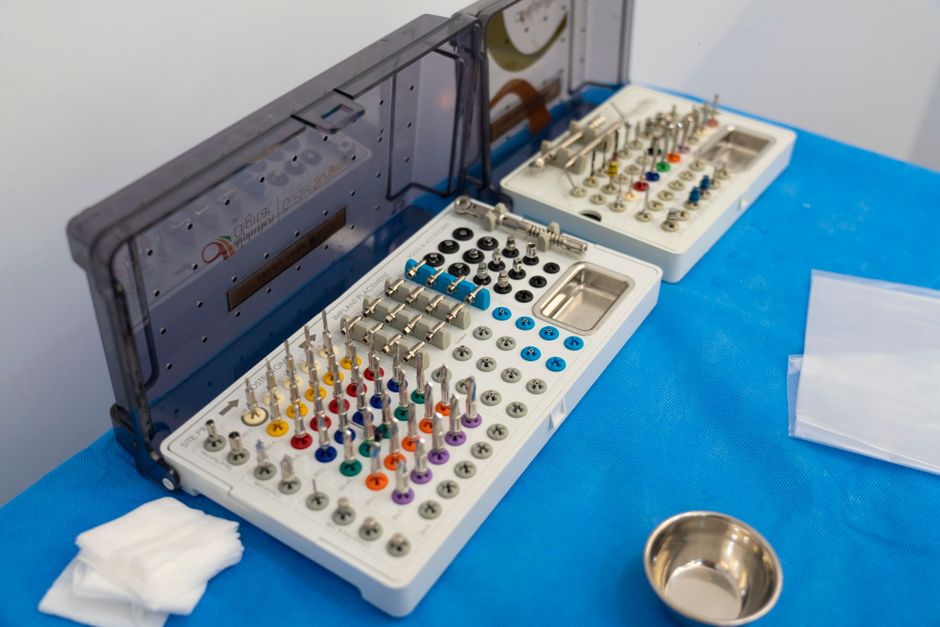
“Dental implants without drilling” can mean different things. Flapless placement avoids lifting a section of gum to expose the bone, but the dentist often still drills an implant bed in the jaw. A genuinely drill-free system is a separate technique that needs its own evidence and case-specific planning. Bone volume, gum tissue, implant location, imaging, and whether grafting is needed all affect which approach is suitable.
Can you get a dental implant without drilling into the jawbone?
Some systems are described as drill-free, but the phrase alone does not establish how the implant site is prepared. Ask the dentist to name the exact procedure and instruments. “Flapless” is a gum-access description; it is not, by itself, a promise that no bone preparation occurs.
The American Association of Oral and Maxillofacial Surgeons’ Introduction to Implant Dentistry: A Student Guide describes conventional implant-bed preparation with a series of irrigated drills, beginning with an initial 2-mm twist drill. Its point is practical: a small gum opening and a drill-free bone procedure are different claims. If an advertisement says “no drilling,” ask what part of the procedure that phrase describes.
There is limited evidence in the provided research about systems that genuinely avoid drilling into bone. Evidence on flapless surgery cannot automatically be used to prove the safety, effectiveness, or longevity of a different drill-free system. The name of the procedure matters because it determines which studies and risks are relevant.
Does flapless implant surgery mean the dentist does not use a drill?
No. Flapless implant surgery means the clinician does not raise a gum flap to expose the bone; it does not necessarily eliminate drilling. The AAOMS guide says flapless surgery could be indicated when adequate keratinized gum tissue covers an ideal ridge form, while visibility or grafting needs may make raising a flap necessary.
That trade-off is about access and visibility. Avoiding a flap may reduce tissue disruption in selected cases, but the clinician still needs a sound plan for the position and preparation of the implant. If the site needs grafting or the bone cannot be assessed adequately through the smaller access, a flap may allow the surgeon to see and treat the area.
Research findings should be kept in their lane. A systematic review by Romandini and colleagues compared flapless fully guided placement with flapped conventional or partially guided placement. Across the included trials, the flapless guided approach had lower postoperative pain scores and shorter surgery duration, but the review found evidence scarce for long-term prognosis and outcomes such as implant survival and success. It also reported deviations from planned implant position and cases in which the protocol could not be completed. These findings describe a studied flapless protocol, not every procedure marketed as no-drill.
What is the difference between flapless and drill-free dental implants?
Flapless refers to how the gum is handled; drill-free refers to a claim about how the bone is prepared. Keep those definitions separate when comparing options. A procedure can be flapless and still use drills to prepare the implant bed.
| Term | What it describes | What to verify |
|---|---|---|
| Flapless placement | Gum tissue is not lifted as a flap to expose bone. | Whether bone drilling, a surgical guide, or grafting is part of the plan. |
| Drill-free system | A claim about avoiding conventional bone drilling. | The exact instruments and steps, plus evidence for that specific system. |
| Guided placement | Planning and transferring an implant position with imaging and a guide. | How the guide is made, what safety margin is used, and how deviations are managed. |
A second systematic review, by Pitman and colleagues, compared flapless with flap surgery for immediate implants. It found no significant difference in implant survival in the included trials, but the evidence involved a small group of patients, short follow-up, and underreported clinical and aesthetic outcomes. The review also reported a difference in horizontal buccal bone change favoring flapless placement, while noting that its clinical relevance was unclear. That does not establish one approach as best for every site.
For a patient, the useful comparison is not a slogan versus a traditional label. It is the planned access method, bone-preparation method, visibility, need for grafting, and evidence that applies to the exact situation.
Who is a good candidate for an implant procedure without drilling?
A good candidate depends on the anatomy and needs at the specific implant site, not just a preference for a smaller opening. Bone volume and shape, gum tissue, implant location, nearby roots and structures, and whether grafting is needed all affect the plan. The AAOMS guide identifies factors such as bone height and shape, bone density, adjacent roots, the mandibular canal, and the maxillary sinus as relevant to radiographic planning.
Imaging helps turn those factors into a site-specific decision. The American Academy of Oral and Maxillofacial Radiology’s position statement recommends cross-sectional imaging for assessing implant sites and names CBCT as its preferred method. It explains that CBCT can show bone volume and topography and the planned site’s relationship to important anatomy. The field of view and exposure parameters should be selected to limit radiation while producing diagnostic images.
CBCT is not a marketing badge or an automatic requirement for every person. Jacobs and colleagues explain that pre-surgical CBCT may be justified when specific anatomical questions matter, such as proximity to vital structures, insufficient bone volume, challenging esthetics, or a planned grafting procedure. Ask what information the scan is expected to add and how it changes the proposed position or need for site development.
Use this checklist at the consultation:
- Clarify the label: “Do you mean flapless gum access, or does this system avoid drilling the bone?”
- Map the steps: “What instruments prepare the site, and what happens if the planned path is not suitable?”
- Review the anatomy: “What does my imaging show about bone volume, gum tissue, nearby structures, and possible grafting?”
- Check the evidence: “What research supports this exact system and technique, and what outcomes were studied?”
- Discuss experience and trade-offs: “How often do you use this method, what are its risks for my site, and what alternatives are reasonable?”
These questions reduce ambiguity. They also make it easier to compare the actual treatment plan rather than competing labels.
Frequently Asked Questions
Does a no-drill implant hurt less or heal faster?
There is no guarantee that a no-drill approach will hurt less or heal faster for an individual. A review of flapless fully guided surgery found lower postoperative pain scores and shorter surgery time in the included trials, but evidence certainty varied and those findings concern a particular flapless protocol, not every drill-free system. Ask the dentist which procedure the comparison refers to and what recovery to expect for your case.
Are drill-free dental implants safe and proven to last?
The provided research does not establish that every system advertised as drill-free is safe or proven to last. Reviews of flapless surgery report varied outcomes, while a systematic review found long-term evidence scarce for clinically important outcomes such as implant survival and success. Ask for evidence on the exact system and procedure being offered.
What scans or planning are needed before this type of implant?
Planning should match the site and the clinical questions. The AAOMR recommends cross-sectional imaging for implant-site assessment and identifies CBCT as its preferred method, while another review says CBCT is justified when specific anatomic considerations make it useful. Ask what the scan will assess, how its field of view and exposure are selected, and whether the plan includes grafting or site development.
What should I ask my dentist if they advertise implants without drilling?
Ask whether the offer means flapless gum access or a system that avoids drilling the bone, and ask what instruments will prepare the implant site. Then ask how imaging and a surgical guide shape the plan, whether your site may need grafting or a flap, and what evidence supports the exact system. Request a clear explanation of the clinician’s experience, risks, and alternatives for your case.
Sources
- American Association of Oral and Maxillofacial Surgeons, Introduction to Implant Dentistry: A Student Guide
- American Academy of Oral and Maxillofacial Radiology, Position Statement on Radiology in Dental Implantology
- Romandini et al., Minimal invasiveness at dental implant placement: A systematic review with meta-analyses on flapless fully guided surgery
- Pitman et al., Immediate implant placement with flap or flapless surgery: A systematic review and meta-analysis
- Jacobs et al., Cone beam computed tomography in implant dentistry: recommendations for clinical use
Disclaimer: This article is for general information only and is not medical advice. It is not a substitute for diagnosis or treatment by a qualified healthcare professional. Always speak to your doctor before acting on anything you read here.
Keep reading

How Can Adults Over 65 Lose Weight Without Losing Muscle?
A practical, evidence-based guide to intentional weight loss after 65 while protecting muscle, nutrition, strength, and independence.

What Are the Best Snacks for Osteoporosis Without Supplements?
Practical calcium, protein, and vitamin D snack ideas for osteoporosis using ordinary foods instead of candy-like supplements.

Why Do I Need an Anticoagulant for AFib?
Understand why AFib anticoagulants are prescribed, how bleeding risk is reviewed, and which safety concerns to raise with a clinician.

How Do I Understand Fatty Liver Test Results and Fibrosis Risk?
A plain-language guide to fatty liver ultrasound findings, ALT and AST, FIB-4 scores, FibroScan, and specialist follow-up.