
How should I cook scrambled eggs for my dog?
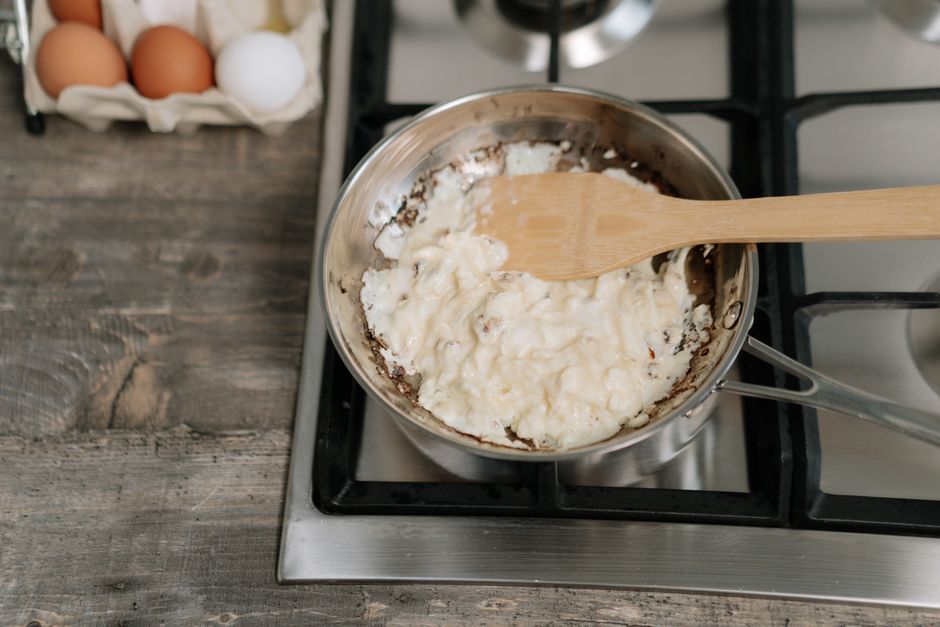
To answer how should I cook scrambled eggs for my dog: cook a plain egg in a nonstick pan over low heat, with no butter, oil, salt, milk, or seasoning, or microwave it in short intervals and stir between them. Cook until fully set and, for a temperature check, 160°F (71°C). Let it cool, offer a small amount, and keep treats within 10% of daily calories.
How should I cook scrambled eggs for my dog without butter or oil?
Cook the egg plain in a nonstick pan over low heat, stirring gently until it is fully set. The pan and low heat do the work; added fat, salt, dairy, and seasoning are unnecessary. The American Kennel Club recommends eggs served plain, without oil, butter, salt, seasonings, spices, or other additives.
Use this simple stovetop sequence:
- Crack an egg into a clean bowl and beat it until the yolk and white are mixed.
- Warm a nonstick pan over low heat. Do not add butter or oil.
- Pour in the egg and stir slowly, scraping the bottom as it sets.
- Remove the pan from the heat when no liquid egg remains and the curds are fully cooked.
- Transfer the egg to a clean dish and let it cool before offering a small portion.
A splash of water is optional if you want to loosen the mixture; it is not needed to cook the egg. Skip milk and other dairy, since the plain version keeps the ingredient list simple. For a broader overview of serving eggs, see Are Scrambled Eggs for Dogs Safe?
Can I add water instead of milk when scrambling eggs for my dog?
Yes, you can add a small splash of water instead of milk, or leave the egg plain. Water adds no seasoning or cooking fat, so it can help loosen the beaten egg while keeping the recipe simple. It does not replace the need to cook the egg fully.
Make the choice based on ease: beat the egg with a little water if you prefer a softer mixture, or pour the beaten egg straight into the pan. Keep the quantity small either way. An egg is a treat, not a substitute for complete, balanced dog food.
VCA Animal Hospitals advises that treats and snacks together make up no more than 10% of a dog’s daily calories; the other 90% should come from complete, balanced food. Introduce a new treat slowly and start with a small amount, especially if your dog tends to have stomach upset. If your dog has a medical condition or eats a prescription diet, check with the veterinary care team first. VCA specifically cautions against high-fat treats for dogs with chronic pancreatitis on a low-fat diet.
How do I make scrambled eggs for my dog in the microwave?
To microwave scrambled eggs for your dog, beat a plain egg in a microwave-safe bowl, heat it in short intervals at reduced power, and stir between intervals until fully cooked. Then let it stand, check for unevenly heated spots, and cool it before serving.
- Beat the egg in a microwave-safe bowl. Add no butter, oil, salt, milk, or seasoning.
- Microwave on reduced power for a short interval, then stir thoroughly.
- Repeat short bursts and stirring until the egg is cooked through, with no runny egg remaining.
- Let it stand after cooking, then break up and inspect the mixture for cold or unusually hot spots.
- Cool it fully before offering a small portion.
The USDA Food Safety and Inspection Service advises cooking egg dishes to 160°F (71°C), measured with a food thermometer. It also warns that microwaves can heat unevenly and leave cold spots, so stirring or rotating helps distribute heat. Reduced power helps prevent eggs from becoming tough, and standing time matters because cooking continues after the microwave stops.
Microwave timing varies with the appliance and amount being cooked, so use the short-interval-and-check method rather than relying on one fixed time. The goal is even, complete cooking—not a particular texture.
How can I tell when the eggs are cooked enough for my dog?
The eggs are ready when they are fully cooked, with no uncooked, runny portions; a thermometer reading of 160°F (71°C) gives a clear check for an egg dish. Serve them only after they have cooled. If you cannot check temperature, keep cooking and stirring until the mixture is uniformly set.
This standard matters for both cooking methods. The American Veterinary Medical Association discourages feeding raw or undercooked animal-source foods, including eggs, because of risks to animal and human health. It identifies Salmonella among pathogens that can contaminate raw or undercooked animal proteins and notes that cooking to a safe minimum internal temperature is a traditional way to reduce or eliminate pathogens.
Microwaved eggs deserve an extra check: stir them well and look for cold spots after standing. Hot spots are also a serving concern, so let the egg cool and test the portion before it reaches your dog. Once cool, offer a small amount and observe how your dog tolerates this new treat.
Portion size is individual, not a fixed number of eggs per dog. The AKC notes that egg calories can contribute to weight gain and that suitable amounts depend on a dog’s size, age, activity, and health. Use the treat-calorie limit as the boundary, count all snacks together, and ask a veterinarian for individual guidance—especially with weight concerns or prescription food.
Frequently Asked Questions
How much scrambled egg is appropriate for a small or large dog?
There is no single portion that fits every dog. Keep egg and all other treats together within 10% of daily calories, with the remaining 90% coming from complete, balanced food. The appropriate amount depends on the dog’s size, age, activity, and health, so ask your veterinarian if you are unsure.
Can my dog have scrambled eggs every day?
The sources do not set a daily egg allowance, and a daily serving could use too much of a dog’s treat-calorie budget. Keep treats within 10% of daily calories and account for egg alongside every other snack. Ask your veterinarian before making it a regular addition, especially if your dog has a medical condition or eats a prescription diet.
Are scrambled eggs a good choice if my dog has diarrhea?
Eggs are not identified as a standard diarrhea treatment in Cornell’s guidance, which describes bland options such as boiled chicken or low-fat hamburger with white rice. Avoid rich foods and excessive treats until diarrhea resolves. Contact a veterinarian if diarrhea lasts 48–72 hours or occurs with lethargy, appetite loss, black or tarry stool, or vomiting.
Cornell University College of Veterinary Medicine advises avoiding excessive treats or rich food until diarrhea resolves. Its guidance recommends veterinary care if diarrhea persists for 48–72 hours or occurs alongside lethargy, appetite loss, black or tarry stool, or vomiting. If diarrhea is the reason you are considering eggs, use the veterinarian’s advice rather than treating scrambled egg as a standard remedy.
Sources
Keep reading
Are Scrambled Eggs for Dogs Safe?
Scrambled eggs for dogs are safe when fully cooked and plain, offered occasionally in small portions.
Find and Meet a Humane Society Dog With Confidence
Learn where to find adoptable dogs, confirm listing status, compare meeting options, and ask useful questions about health and behavior.

How Can I Rehome a Dog Safely?
Rehome a dog safely by comparing placement options, screening adopters, sharing complete care information, and preparing a thoughtful transition.
What Can a Mobile Vet Do at Home, and When Do You Need a Clinic?
Learn what mobile vets can handle at home, when a clinic is needed, and how to prepare your pet for a house-call appointment.