
How Can I Calm Down When Stress Feels Unbearable Right Now?
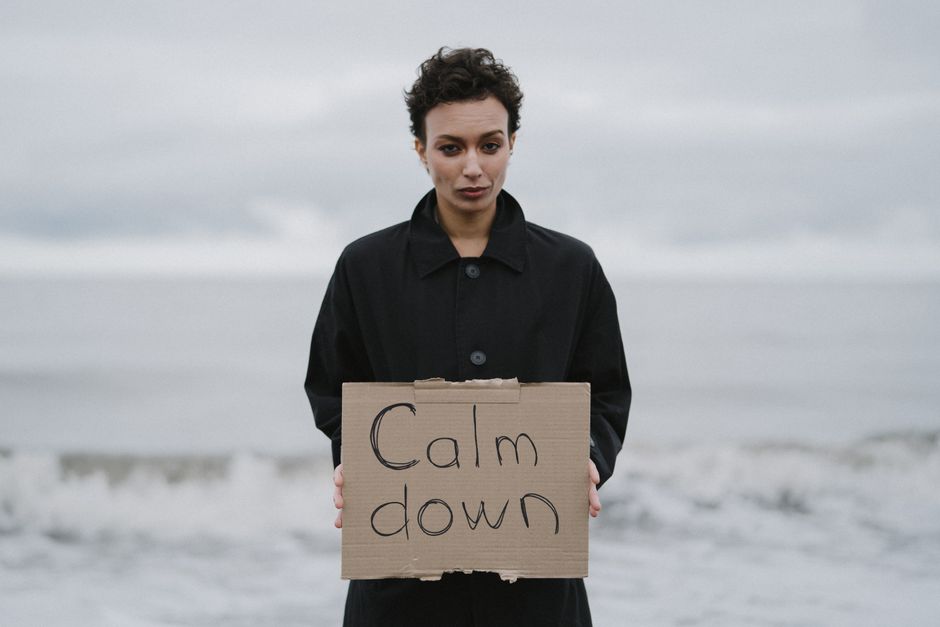
When stress feels unbearable, reduce the next decision to one small task: slow the exhale, feel both feet on the floor, name what your senses detect, take a drink of water if available, and move to a safer or quieter place. This does not solve the cause of stress. It can settle the body enough to assess safety and choose the next step.
How can I calm down when stress feels unbearable right now?
Calming down starts by giving the body fewer jobs, not by demanding a clear mind.
The National Center for Complementary and Integrative Health explains that the relaxation response slows heart rate, lowers blood pressure, and decreases oxygen use and stress-hormone levels. Acute stress does the opposite: it raises breathing rate, heart rate, blood pressure, muscle tension, and sweating.
Use a short sequence. One step at a time.
| State | First task | Purpose |
|---|---|---|
| Panic or racing breath | Exhale fully, pause, then inhale slowly | Turns attention toward a slower breathing pattern |
| Shaking or agitation | Press both feet into the floor and notice pressure | Gives the body a fixed point |
| Freeze or shutdown | Name one thing seen, heard, felt, smelled, and tasted | Reconnects attention with the present surroundings |
| Racing thoughts | State one next action in plain words | Limits the decision to a manageable unit |
The grounding steps above draw from an Open RN chapter in the NCBI Bookshelf: notice thoughts and feelings, fully exhale, pause, inhale slowly, press feet into the floor, and use the five senses.
Water is not a treatment for acute stress. It is a simple pause, a change in sensation, and a chance to check whether the immediate need is thirst, food, rest, safety, or contact with another person. Once the acute moment has passed, routines that support concentration can also matter; this food-focused guide to memory and concentration covers that separate question.
Safety comes first. If there is immediate danger, call 911 and say that a mental health crisis is happening, as the NCBI Bookshelf guidance advises.
Why does stress make my heart race and my body shake?
Stress makes the heart race and the body shake because the sympathetic nervous system prepares the body to fight, flee, or freeze in response to a real or perceived threat.
According to MedlinePlus, stress hormones raise blood pressure, heart rate, and blood glucose as part of the fight-or-flight response. The NCBI Bookshelf chapter adds rapid breathing, increased cardiac pumping, sweating, and the release of epinephrine, norepinephrine, and cortisol.
The body is acting before the mind has finished sorting the facts. That is why a calm room can still feel unsafe.
Panic can add palpitations, shortness of breath, chills, dizziness, numbness, trembling, and shaking. MedlinePlus states that a panic attack often peaks within 10 to 20 minutes, while some symptoms continue for an hour or longer. That time course does not prove a symptom is panic.
New, severe, or uncertain physical symptoms need medical assessment. MedlinePlus notes that panic symptoms can be mistaken for a heart attack. Do not use a stress label to dismiss a medical emergency.
Acute stress is short term. Chronic stress lasts weeks, months, or longer, according to MedlinePlus. Long-running stress can be linked with sleep trouble, headaches, digestive problems, sadness, anger, irritability, depression, anxiety, heart disease, high blood pressure, and diabetes. The five-minute sequence is for the immediate wave. Ongoing strain calls for ongoing support.
What can I do in five minutes when I am overwhelmed?
In five minutes, use breathing, body contact, sensory grounding, hydration, and one safe decision rather than trying to solve the whole problem.
Start by noticing the thought without arguing with it. Then fully exhale, pause for 3 seconds, and inhale slowly; the 3-second pause comes from the grounding sequence in the NCBI Bookshelf chapter. Repeat at a pace that feels steady rather than forced.
Slow breathing has evidence behind it, with limits. NCCIH reports that a 2019 review of 3 studies involving 880 participants found preliminary evidence that diaphragmatic breathing reduced stress-related measures, including self-reported mental health measures, cortisol, and blood pressure. NCCIH also reports that slow, deep breathing can modestly lower blood pressure and cortisol.
A 2018 randomized study of 23 prehypertensive veterans with PTSD compared device-guided breathing at 5 breaths per minute with sham breathing at 14 breaths per minute for 15 minutes. The slow-breathing group showed a mean systolic blood-pressure reduction of 9 plus or minus 2 mmHg and reduced muscle sympathetic nerve activity, according to the PubMed study. The study found no significant heart-rate change, and its findings apply to that specific study group.
Then change the sensory field. Put feet on the floor. Look for five ordinary objects. Name the room. Sip water if it is available. Lower noise or move toward light, air, or another safe person.
Last, choose a next decision small enough to complete: send one message, sit near another person, contact a health professional, or seek urgent help. Calm is not the test. Safety is the test.
Frequently Asked Questions
Do breathing exercises actually help with acute stress?
Slow, deep breathing can support the relaxation response, which NCCIH says slows heart rate, lowers blood pressure, and reduces stress-hormone levels. NCCIH's 2019 review found preliminary evidence that diaphragmatic breathing reduced stress measures, while a small 2018 study in prehypertensive veterans with PTSD found short-term blood-pressure and sympathetic-nerve changes with device-guided slow breathing. It is a stabilizing tool, not a diagnosis or a substitute for urgent care.
How can I stop stress from making me freeze or shut down?
Freeze is part of the body's fight, flight, or freeze response to actual or perceived stress, according to Open RN's NCBI Bookshelf chapter. Start with physical orientation rather than a large decision: press both feet into the floor, name sensory details, and use one slow exhale. The aim is not to force productivity; it is to restore enough contact with the present moment for one safe next action.
When is overwhelming stress a reason to seek urgent help?
Call 911 or go to the nearest emergency room in a life-threatening situation, according to NIMH. Call, text, or chat 988 for 24-hour confidential support during suicidal crisis or emotional distress; NCCIH also directs people in immediate distress or thinking of self-harm to 988. New, severe, or uncertain symptoms such as chest discomfort, breathlessness, faintness, or a fast heartbeat also deserve medical assessment because panic symptoms can resemble a heart attack.
NIMH states that mental-health treatment commonly includes therapy, medication, or both, and that a primary-care clinician can provide an initial screening and referral. A safe next decision is sometimes a clinical one.
Sources
- National Center for Complementary and Integrative Health: Stress
- MedlinePlus: Stress
- Open RN / NCBI Bookshelf: Stress and Coping
- National Institute of Mental Health: Find Help
- PubMed: Device-Guided Slow Breathing Study
- MedlinePlus Medical Encyclopedia: Panic Disorder
Disclaimer: This article is for general information only and is not medical advice. It is not a substitute for diagnosis or treatment by a qualified healthcare professional. Always speak to your doctor before acting on anything you read here.
Keep reading
How Do I Build a Routine When Depression Makes Everyday Tasks Feel Hard?
A practical behavioral-activation guide for building a smaller routine when depression makes daily tasks and avoidance feel overwhelming.
Should I Discuss Daily or As-Needed Anxiety Medication With a Prescriber?
A clear guide to discussing daily and as-needed anxiety medication options, timelines, risks, and follow-up with a prescriber.